
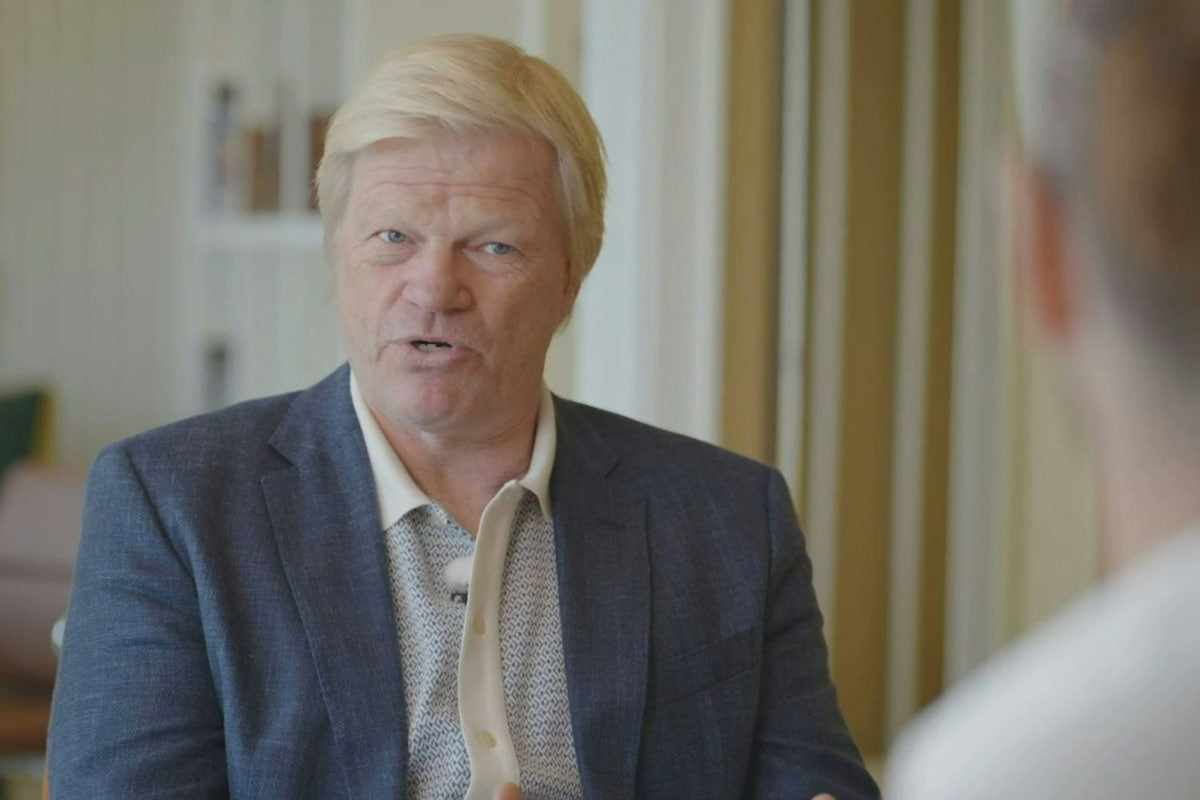
Oliver Kahn Criticizes German Football and Bayern Munich
Legendary goalkeeper and former Bayern Munich CEO Oliver Kahn has delivered a stark assessment of the state of German football and his former club in an exclusive interview with Sky Sport. His remarks, coming amid the departure of Florian Wirtz to the Premier League, carried a mix of nostalgia and frustration — painting a picture of a Bundesliga that, in Kahn’s view, is losing its allure.
At the heart of Kahn’s comments was a direct message to Bayern Munich. According to the “Titan,” the Bavarian giants are no longer as attractive to elite players as they once were. He pointed to Wirtz’s move abroad as a worrying sign for the entire league.
“Top players aren’t enticed by the idea of Bayern winning yet another
trophy,” Kahn suggested, reflecting on the growing number of
high-profile rejections the club has faced.
The former Bayern shot-stopper argued that Bayern’s dominance, once a badge of honor, has paradoxically become a turn-off. For many Bundesliga players, a move to Bayern is effectively a guaranteed domestic title within a year or two. But that prospect, Kahn believes, no longer excites the elite.
Wirtz, for instance, might have been more willing to join Bayern had Bayer Leverkusen not clinched the Bundesliga title last season. Instead, at just 22 years old, he saw little motivation to chase what would have been Bayern’s 15th, 16th, or even 17th championship in a row.
Bayern’s Transfer Philosophy Under Fire
What Kahn didn’t say outright — perhaps to avoid being accused of “biting the hand that once fed him” — is that Bayern’s transfer policy over the last decade has often been too rigid and traditionalist.
The club, Kahn noted, reflects a typically German mentality of precision and loyalty to tradition. But in the fast-moving world of modern football, those traits can be a handicap. Bayern’s long-time honorary president Uli Hoeneß made it clear over a decade ago:
“I don’t want to buy a player for €100 million, even if I have the
money.”
The problem? Football has changed, and Bayern have been slow to adapt. The club has struggled to consistently land world-class players, and their few big-money buys — such as Lucas Hernández, Corentin Tolisso, or Matthijs de Ligt — have been hit-or-miss. Meanwhile, the days of scooping up elite talent at bargain prices are long gone.
Other Bundesliga Clubs Are Finding Ways to Compete
While Bayern have stumbled, other Bundesliga clubs have shown how to thrive within the league’s financial ecosystem.
Eintracht Frankfurt, for example, signed players like Randal Kolo Muani, Omar Marmoush, and Hugo Ekitike for a combined €16 million and boosted their collective market value to €270 million within a few seasons.
Bayer Leverkusen, after hiring Xabi Alonso, used the draw of a charismatic and ambitious coach to attract players — and delivered results to back it up. RB Leipzig continue to unearth hidden gems, develop them, and sell them at a premium year after year.
Clearly, the Bundesliga remains a viable destination for players. It’s about the right approach. Bayern’s “guaranteed trophy” pitch was enough to persuade Harry Kane to make the move from Tottenham, but it held little sway over Wirtz.
Measuring Success: Domestic Popularity vs. European Glory
Kahn’s broader point is that the Bundesliga’s reputation shouldn’t be measured solely by Bayern Munich’s fortunes. But if one does take that approach, the numbers aren’t flattering.
Since 2013, German clubs have won just three European trophies (two by Bayern and one by Eintracht Frankfurt). In comparison, Spanish teams have captured 14 titles in the same period, while English clubs have won eight.
“The Bundesliga’s strength has to be judged by its European success,”
Kahn said, arguing that the league’s clubs have simply not been
competitive enough on the continental stage.
Yet even during Kahn’s own playing days, Bayern were not perennial finalists in Europe, and Bundesliga teams suffered humiliating defeats as well — such as Bayer Leverkusen’s 1-7 thrashing by Barcelona or Werder Bremen’s 2-7 loss to Lyon.
Bundesliga’s Paradox
Despite these struggles in Europe, the Bundesliga thrives domestically. Stadiums are filled to 96% capacity, and last season the league sold 11.6 million tickets — outpacing La Liga and the Premier League in average attendance. The Bundesliga remains a strong commercial product at home, even with the league’s unique 50+1 rule that limits outside ownership.
Bayern, for all their issues, continue to be regular participants in the latter stages of European competition. But can the Bundesliga grow to be known for more than just one club’s dominance? That’s a question Kahn believes German football needs to answer sooner rather than later.
Published by Patrick Jane
30.07.2025